




In our July webinar, Cedar & Stone Co-Founder Justin Juntunen sat down with Dr. Dylan Wyatt, Emergency Medicine Chairperson at Aspirus Health, for a conversation about sauna, health, and the growing gap between what research actually shows and what wellness culture often claims.
Sauna is receiving more attention than ever.
It is discussed on podcasts, built into longevity routines, recommended for recovery, and marketed as a solution for everything from heart health and dementia to detoxification, weight loss, and immunity.
Some of those claims are supported by compelling research.
Some are still being studied.
Others have been repeated so often that it has become difficult to tell where the science ends and the marketing begins.
Throughout the conversation, Justin and Dr. Wyatt returned to a simple idea:
Sauna already has meaningful, well-supported benefits. We do not need to exaggerate them.
Watch the full conversation:
Watch Justin Juntunen and Dr. Dylan Wyatt explore:
- The strongest research behind sauna and cardiovascular health
- Blood pressure, stroke, dementia, and brain health
- Detoxification, immunity, inflammation, and mental health
- Traditional Finnish sauna compared with infrared heat
- Heat shock proteins and the limits of current research
- Sauna safety, pregnancy, fertility, and cold plunging
- How to build a practice that is enjoyable, sustainable, and safe
This conversation is intended for general education and does not replace personal medical advice.
Why the Definition of Sauna Matters
Before reviewing the research, Dr. Wyatt began by defining what most major sauna studies are actually studying.
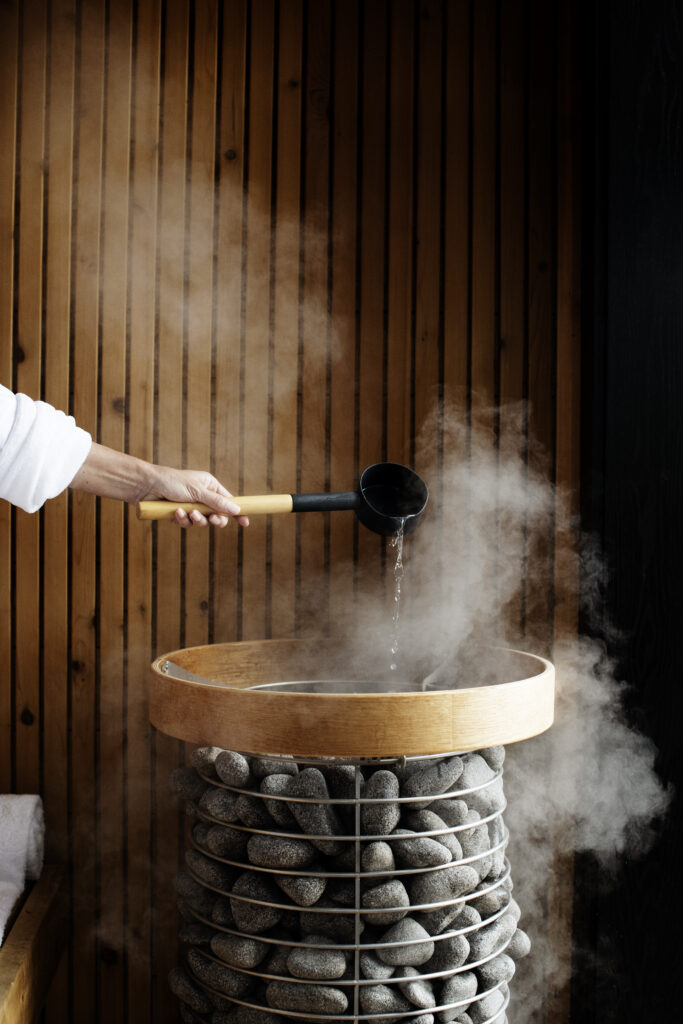
In scientific research, sauna generally refers to repeated exposure to temperatures between 80 and 100 degrees Celsius in a low-humidity environment. This is much closer to traditional Finnish sauna than many of the infrared cabins (aka infrared saunas), steam rooms, hot tubs, and lower-temperature heat products that are now marketed under the same broad category.
That distinction matters.
A health claim is only as reliable as the research behind it. When data from traditional Finnish sauna is used to promote an entirely different form of heat exposure, important context is lost.
There is emerging research around infrared heat, particularly through Japanese Waon therapy, but the available body of evidence is smaller. Infrared may produce some comparable physiological effects when the body reaches a similar level of thermal stress, although it generally takes longer to create that response.
The point of the conversation was not to declare that one form of heat has value and another does not.
It was to ask whether companies are being honest about which experience was actually studied.

Where the Evidence Is Strongest
The strongest sauna research is connected to cardiovascular health.
Long-term Finnish population studies have found a relationship between frequent sauna use and lower rates of sudden cardiac death, fatal coronary heart disease, stroke, and death from all causes.
Dr. Wyatt explained that heat causes blood vessels to expand and the heart rate to increase, creating a response that resembles low- to moderate-intensity cardiovascular exercise.
Over time, regular exposure may also help blood vessels become more responsive and flexible. That matters because vascular health affects nearly every organ in the body.
The conversation also explored the relationship between regular sauna use and blood pressure. Frequent sauna users have shown a significantly lower risk of developing high blood pressure, which may help explain some of the research around stroke prevention and long-term heart health.
These are not fringe claims or isolated personal experiments. They come from large groups of people studied over long periods of time.
That is what makes the evidence compelling.
What Is Good for the Heart May Be Good for the Brain
The brain depends on healthy blood flow, so it makes sense that some of sauna’s cardiovascular benefits may also affect long-term brain health.
During the webinar, Dr. Wyatt discussed research showing lower rates of Alzheimer’s disease and other forms of dementia among frequent sauna users.
Researchers are still working to understand exactly why that relationship exists.
Part of the answer may be improved vascular health. Another possible explanation involves heat shock proteins, which increase in response to heat and help the body identify and remove damaged proteins within cells.
These proteins may play a role in clearing the amyloid and tau buildup associated with dementia, although Dr. Wyatt was careful to separate what researchers know from what they currently suspect.
Heat clearly affects heat shock proteins.
The exact role those proteins play in long-term health is still being studied.
That distinction came up repeatedly throughout the conversation. Promising research deserves attention, but it should not be presented as certainty before the evidence is there.

The Problem With “Detox”
Few words appear more frequently in sauna marketing than detox.
It is also one of the least specific.
As Dr. Wyatt explained, detox once described the removal of a clearly identified harmful substance from the body. Today, it can refer to everything from alcohol withdrawal and heavy-metal exposure to eating healthier after a vacation.
Without knowing what someone means by detox, it is nearly impossible to evaluate the claim.
There is limited evidence that sweating may help the body excrete certain compounds, including small amounts of heavy metals, BPA, and phthalates.
Sauna does not, however, sweat microplastics out of the body. Microplastics do not dissolve in water and cannot simply be removed through sweat.
There may still be value in the body’s ability to excrete some of the chemicals associated with plastics, but that is a much narrower and more accurate claim.
Dr. Wyatt encouraged viewers to ask for specificity whenever a wellness product promises detoxification.
- What substance is being removed?
- How much is being removed?
- Is that amount medically meaningful?
Those questions may not fit neatly into an advertisement, but they help people make better decisions about their health.
Sauna and Mental Health
Some of the most interesting emerging research concerns sauna, inflammation, and mental health.
Researchers are studying whether chronic systemic inflammation may play a role in certain cases of treatment-resistant depression. Because regular sauna use appears to have anti-inflammatory effects, heat exposure may eventually become part of a broader conversation about mental health treatment.
The data is still developing.
Dr. Wyatt also pointed to factors that are more difficult to measure in a clinical study.
Sauna can create routine, it can bring people together, and it can give someone a reliable place to rest, talk, and step away from the demands of daily life.
Those parts of the practice may matter just as much as the physiological response to heat.
The strongest sauna research comes from Finland, where sauna is woven into family life, community, rest, and social connection. If we remove all of those elements and reduce sauna to a temperature, a timer, and an optimization goal, we may be removing part of what made the practice beneficial in the first place.
When Wellness Becomes an Endurance Test
One of the clearest themes in the webinar was the tendency to assume that more discomfort creates better results.
Think longer sessions, higher temperatures, more extreme cold.
A growing number of longevity personalities are testing aggressive heat routines and measuring changes in their bodies. Dr. Wyatt compared these experiments to the test pilots of the early space program.
They may be doing important work.
They are also taking risks that should not automatically be copied by the general public.
A personal experiment involving one highly monitored individual is not the same thing as repeatable research across a large population.
Traditional sauna research does show a dose-dependent relationship. More frequent use is associated with greater benefits up to a point.
That does not mean every session needs to become a test of endurance.
The most useful sauna practice is one a person enjoys enough to continue. Someone who regularly spends time in a comfortable sauna with friends may benefit more than someone who follows an extreme routine for two weeks and then stops.

Sauna Should Be Enjoyed, Not Endured
Justin and Dr. Wyatt also discussed the larger practice surrounding sauna.
Traditional sauna does not usually mean sitting in extreme heat for as long as possible.
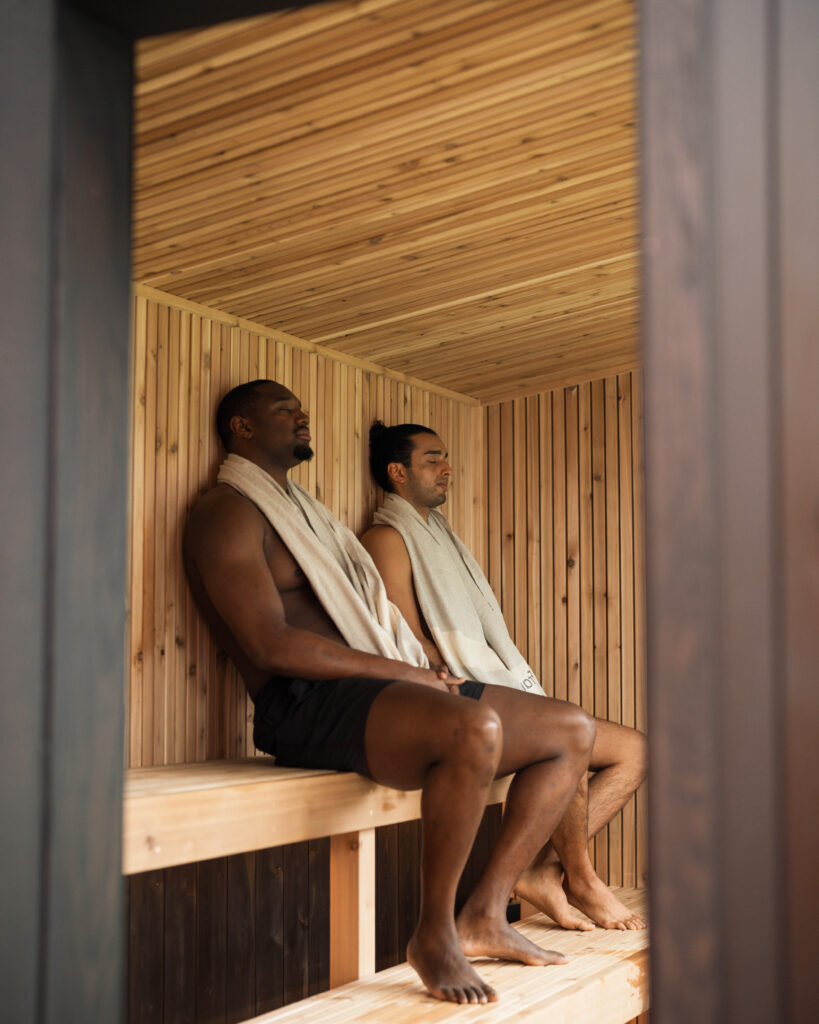
It includes heating up, cooling down, resting, drinking water, spending time outside, talking with other people, and returning to the heat when the body feels ready.
That full experience gives the body time to respond .It also makes sauna feel less like another health assignment.
This became one of Dr. Wyatt’s final takeaways from the conversation: Do not endure the sauna. Enjoy it.
The goal is to learn how your body responds and gradually find a practice that feels good, remains safe, and can become part of your life.
Fertility, Pregnancy, and Cold Plunging
The webinar also addressed several questions that deserve more caution.
Regular heat exposure can temporarily reduce male sperm count and motility. These effects generally reverse after sauna use is reduced or stopped, but they may be relevant for couples who are actively trying to conceive.
Pregnancy is more complicated.
American medical organizations generally recommend avoiding environmental heat exposure during pregnancy, particularly during the first trimester. Finnish population data does not show the same level of risk from dry sauna that has been associated with hot tubs and high-humidity environments, but the available findings are not broad enough to support a universal recommendation.
Pregnant women should make those decisions with an obstetrician or qualified midwife who understands their individual medical history.
Dr. Wyatt was more direct about cold plunging during pregnancy. Sudden cold exposure can increase the risk of abnormal heart rhythms and should be avoided.
Cold plunging also has less long-term research behind it than sauna.
There may be recovery benefits for high-level athletes, and many people enjoy the alertness and sense of accomplishment that follow cold exposure. For most people without underlying heart conditions, cold plunging can be done safely when approached gradually.
It should still be treated with respect.
Cold water creates a sudden stress response. People with heart disease, arrhythmias, or a family history of rhythm disorders should speak with a medical professional before participating.

What We Know, and What We Are Still Learning
The science of sauna is not finished.
Researchers are still studying inflammation, mental health, autoimmune conditions, heat shock proteins, infrared heat, and many other areas discussed during the webinar.
That uncertainty does not weaken the case for sauna.
It makes it more important to communicate the evidence honestly.
We already know that regular sauna use is associated with meaningful cardiovascular benefits. We know it affects blood vessels, heart rate, blood pressure, and the body’s response to heat. We have promising research around brain health and emerging evidence in several other areas.
We also know that sauna is generally low risk for many people when it is approached thoughtfully.
Dr. Wyatt closed the conversation with three ideas:
- Do not endure sauna. Enjoy it.
- Do not become so focused on wellness that you lose sight of your health.
- Sauna is generally safe when you listen to your body and understand your own medical risks.
For centuries, people used sauna without tracking their core temperature, measuring every biomarker, or trying to turn the experience into a competitive event.
They returned because it felt good.
It brought people together.
It helped them rest.
Science is now beginning to explain why that cultural wisdom has lasted.
Explore Cedar & Stone Outdoor Saunas
A lasting sauna practice begins with a space you want to return to.
Cedar & Stone saunas are designed around traditional heat, natural materials, and the belief that sauna should be enjoyed for decades.
Or connect with our team to discuss bringing sauna to your home, hospitality property, or wellness business.