Why Kids Belong in the Sauna (and What They’ll Learn There)
In Finland, kids grow up with sauna.
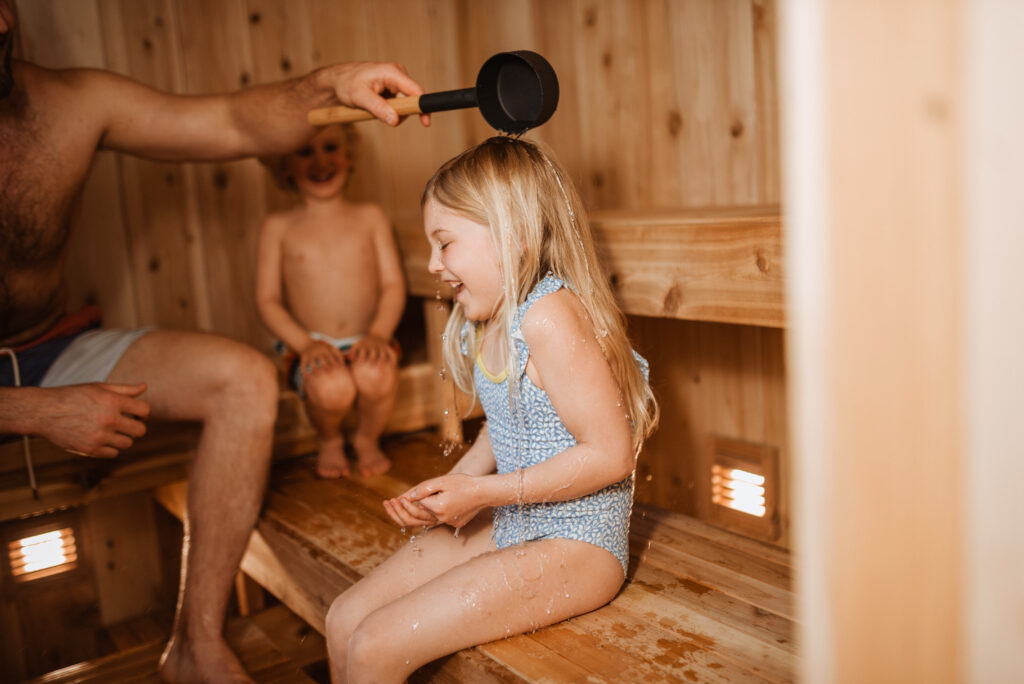
They go in with their parents and grandparents. They learn where to sit, when to cool off, how to throw water on the stones, and eventually how to help get the sauna ready.
When Finnish families immigrated to the United States, they brought sauna with them. Saunas went into basements, barns, cabins, and backyards. Kids hauled wood, carried water, ran between the hot room and the outdoors, and learned sauna by being part of it.
That’s how we’ve always known sauna at Cedar & Stone. It belongs in family life.
Can Kids Use a Sauna?
Healthy children can sauna with their families, but children handle heat differently than adults and need close supervision.
The Finnish Sauna Society notes that children heat up more quickly than adults, especially when they are very young. Their guidance emphasizes hydration, adult supervision, and letting children leave the hot room whenever they want.
For us, the rule is simple: sauna with kids happens on the kid’s terms.
The goal is to let them get familiar with sauna gradually, with an adult close by and no pressure to stay longer than they want.
“The sauna was a space where dad was present to us. It was where we got to share our lives.”
For Justin, some of his strongest memories of sauna have less to do with heat than with having his dad’s full attention.
Without phones, email, or television competing for attention, families have more room to talk and spend time together.
Research on parent-child relationships also points to the importance of consistent parental involvement and connection in children’s emotional wellbeing and development (Frontiers in Psychology).
Justin remembers sauna holding a place alongside another important family ritual:
“In my family, the sauna was second only to the dinner table. And if we were at the dinner table, the chances were the sauna was heating up steps away.”
Over time, those ordinary evenings became part of how the family stayed close.
What Kids Learn in the Sauna
They Learn to Listen to Their Bodies
Heat gives kids immediate feedback.
They learn what it feels like to get warm, when they want to move to a lower bench, when they need water, and when they’re ready to step outside.
Letting them decide when they’ve had enough helps them learn to recognize and communicate their own limits.
They Get Uninterrupted Time With Their Family
Family life fills up quickly with school, work, activities, chores, errands, and screens.
Once everyone is in the sauna, there isn’t much else competing for attention.
Justin wrote:
“The distractions of work and other responsibilities were left at the door.”
Kids notice when a parent is actually there with them.
They get time to tell a story, ask a question, or sit quietly without competing with something else for attention.
They Learn to Contribute
Sauna has always come with a little work.
Stack the wood. Fill the bucket. Bring in the towels. Help get things ready.
In Justin’s family, those jobs started early:
“If you were old enough to carry one piece of wood to the woodpile, you were old enough to help.”
To an adult, one piece of wood may not seem important. To a kid, it means they had a role.
They carried it, added it to the pile, and later sat in the sauna they helped prepare.
Research on household responsibilities has also associated childhood chores with skills including self-efficacy and executive functioning (Psychology Today).
Sauna gives kids a direct connection between contributing and enjoying something together.
Is Sauna Safe for Kids?
Children can enjoy sauna safely, but they should not be treated like small adults.
According to the Finnish Sauna Society, children heat up more quickly and have less developed temperature regulation than adults.
For younger kids, they recommend a few practical precautions::
Keep an adult with young children at all times.
Let children leave whenever they want.
Start on a lower bench, where it is cooler.
Keep water available.
Be especially careful around the stove, hot water, and steam.
Do not bring a child with a fever or acute illness into the sauna.
Talk with your child’s doctor if they have a health condition that could affect heat tolerance.
The North American Sauna Society similarly emphasizes following a child’s individual heat tolerance rather than prescribing a set amount of time.
There isn’t one temperature or session length that works for every child. Age, experience, heat tolerance, and where the child sits all matter.
How to Introduce Your Kids to Sauna
Show Them Around First
Let them see the sauna before it heats up.
Show them the stove, stones, bucket, ladle, and benches. Explain what happens when water hits the stones and why the upper bench is hotter.
Start Low and Easy
Begin on the lower bench and let them decide how long they want to stay.
Their first round may only last a few minutes.
Give Them a Job
Let them carry a towel, bring in a small piece of wood, fill a cup, or help get the sauna ready.
Giving them something small to help with makes sauna more familiar and participatory.
Keep the Cool-Down Simple
Young children do not need an extreme cold plunge.
Fresh air, a break outside, or lukewarm water is plenty.
Stay Close and Pay Attention
If they feel uncomfortable or want to leave, the round is over.
Why Family Sauna Matters
Regular family routines and shared experiences have been associated with stronger wellbeing in children (SpringerLink).
Research has also raised concerns about the relationship between excessive screen use and children’s mental health (American Psychological Association), while time outdoors has been associated with better psychological wellbeing (Children & Nature Network).
For families who sauna regularly, that time together becomes part of the weekly routine.
Over time, you’ll stop thinking of sauna as an outing or activity and simply work it into the way you spend time together.
Growing Up With Sauna
Justin once wrote:
“Fire building is a lot like life: if you tend things well, they will grow.”
One of our clients, Liz K., describes seeing that happen with her own family.
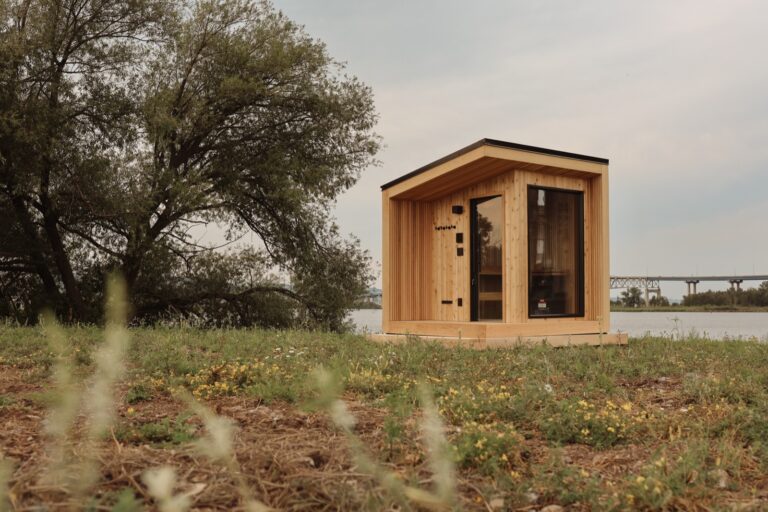
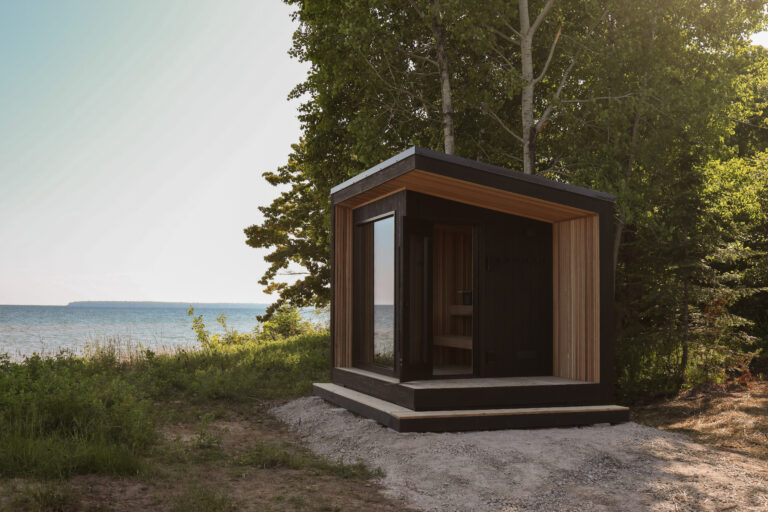
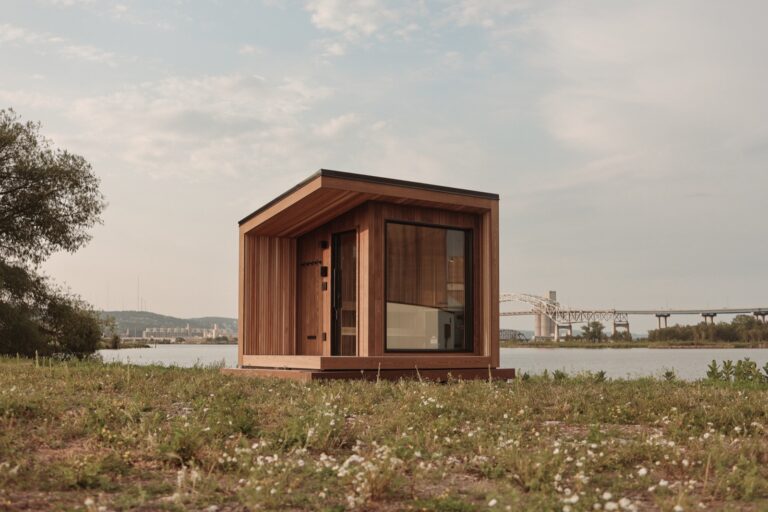
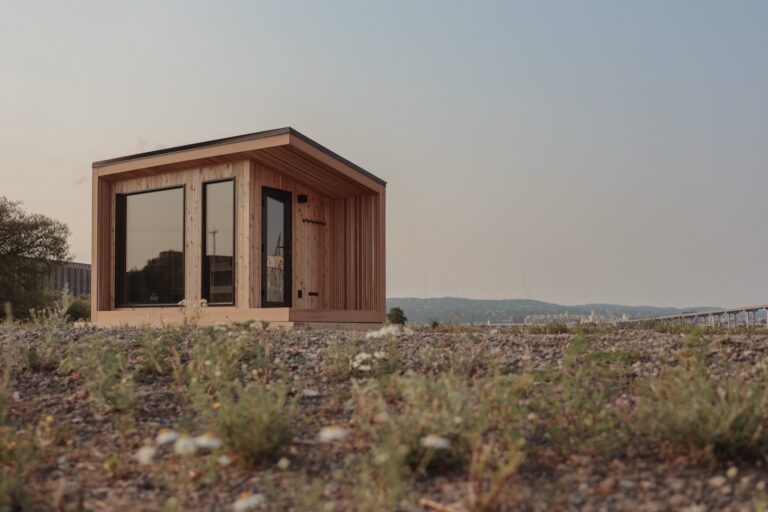
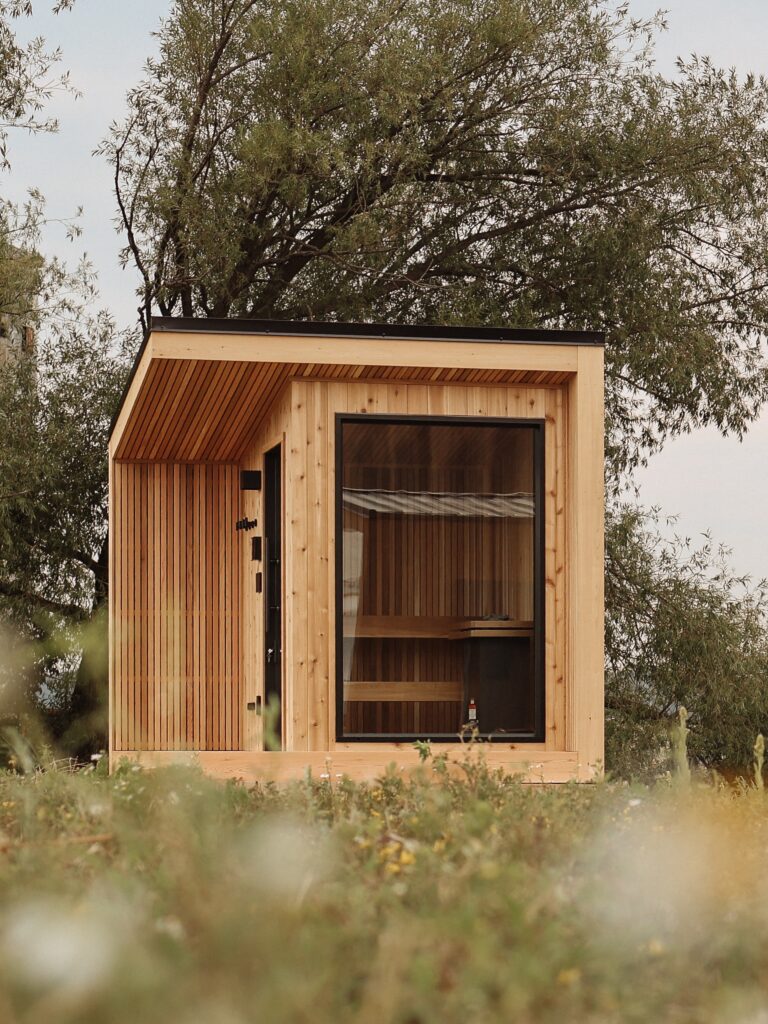
Liz and her husband added a Cedar & Stone Model 5 outdoor sauna to their lakehome on Madeline Island. They wanted sauna to become part of how their boys knew the island and the time they spent there together.
Liz said:
“It’s part of slowing down. It’s part of the culture of wanting to be out here on the island and slowing down together.”
She and her husband picture their boys growing up with memories of running between the lake and the sauna.
“When they go back to school in Duluth and talk to their friends, we want them to be like, ‘Yeah, when we go to the lakehouse, we sauna. That’s what we do.’”
That’s the kind of familiarity they want to build around sauna. Something their boys associate with being at the lake, spending time together, and growing up there.
Bring Sauna Into Your Family Routine
The way a family uses its sauna naturally changes over the years.
Kids eventually move from the lower bench to the upper one, friends and grandparents join them, and the sauna gets used through summer lake days and winter nights alike.
If you want to start that tradition this winter, explore our Available Now Collection to see fully built Cedar & Stone outdoor saunas available for accelerated delivery.