There’s a certain beauty to cold exposure in winter.
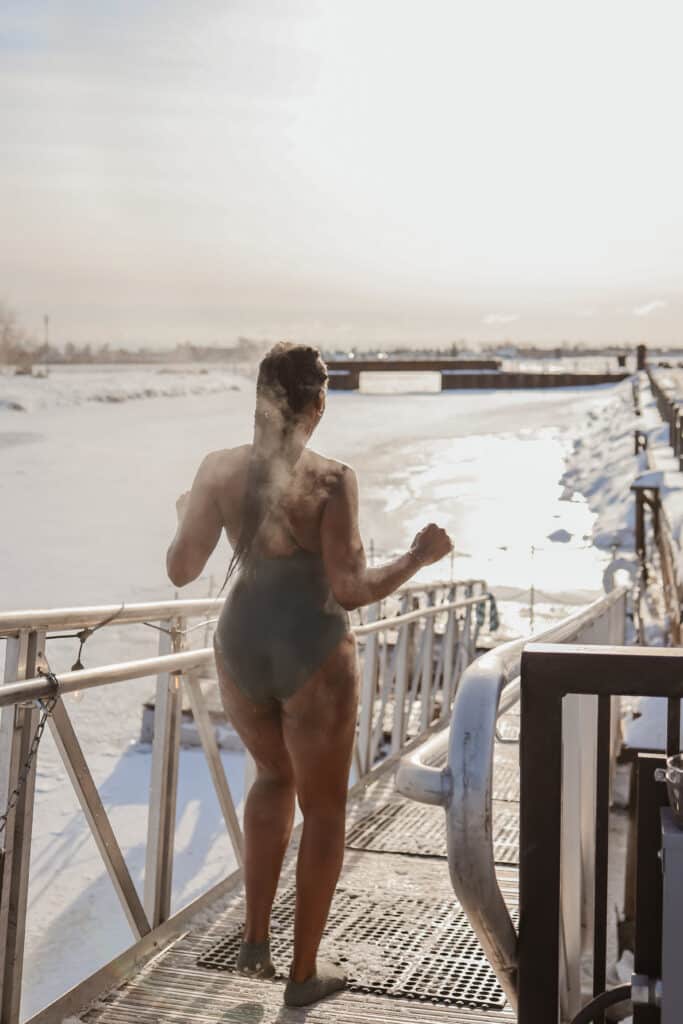
Ice on the shoreline. Breath hanging in the air. Lake Superior moving slowly beneath a sheet of gray sky. From the outside, winter swimming can look extreme. For some people, it looks intimidating. For others, it looks reckless.
“Cold exposure isn’t about pushing limits. It’s about creating spaces where people feel supported enough to step in.”
— Justin Juntunen, Founder, Cedar & Stone Nordic Sauna
At Cedar & Stone, cold exposure isn’t about testing how much you can handle. It’s about creating experiences people can step into safely, with enough support to feel confident doing something unfamiliar.
Especially the first time.
Designing With Intention
Our spaces are designed to be beautiful, but they’re also designed to work.
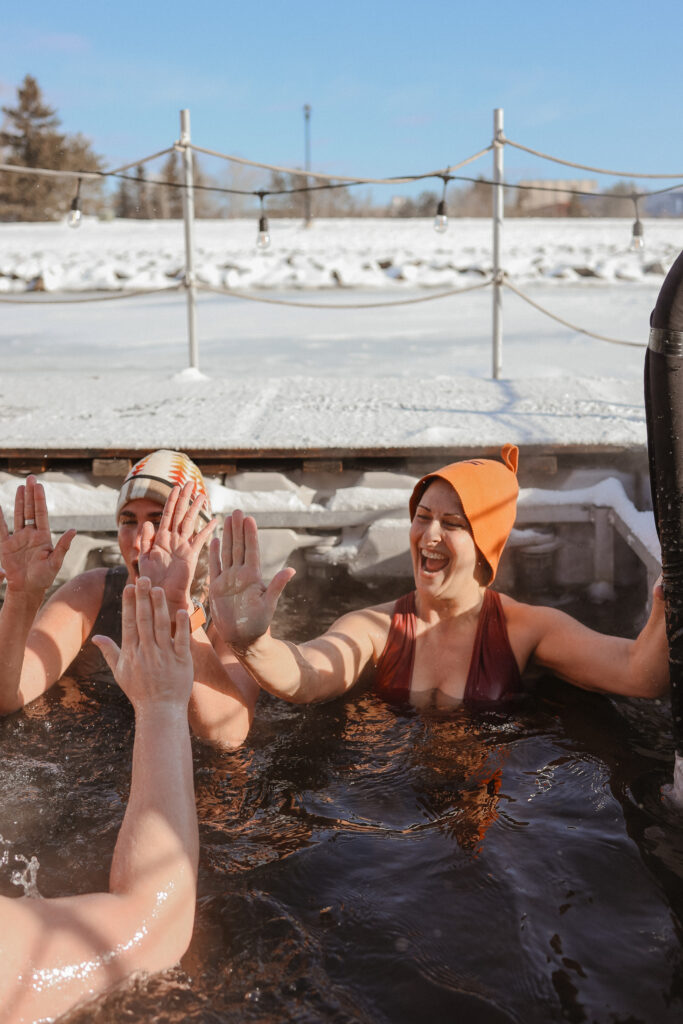
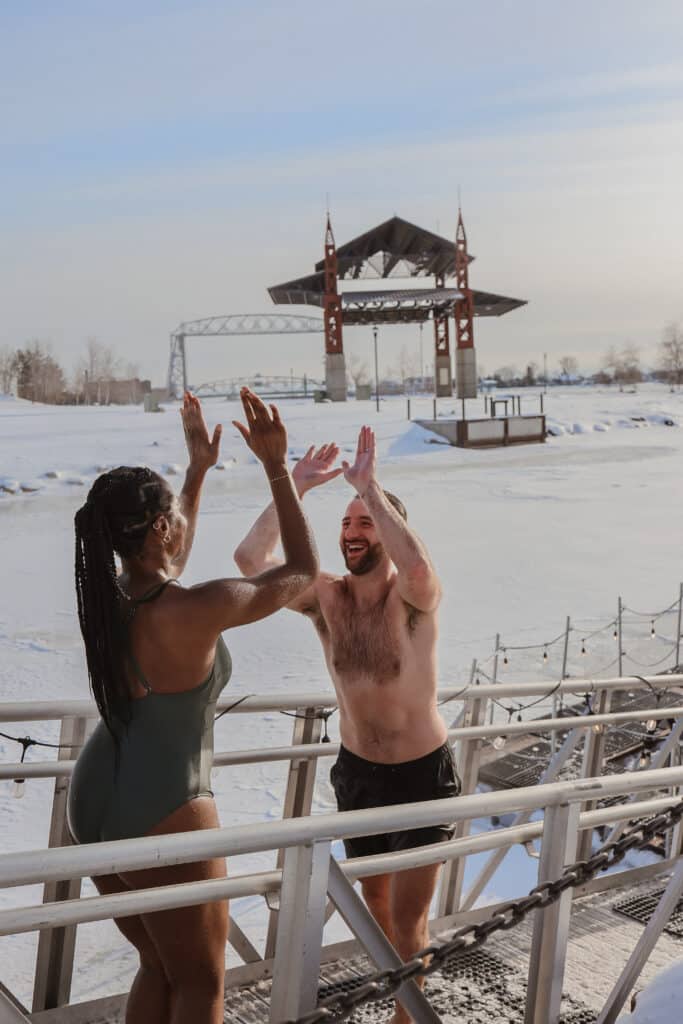
Cold exposure is powerful. When someone is stepping into 34-degree water in the middle of a Minnesota winter, the details matter.
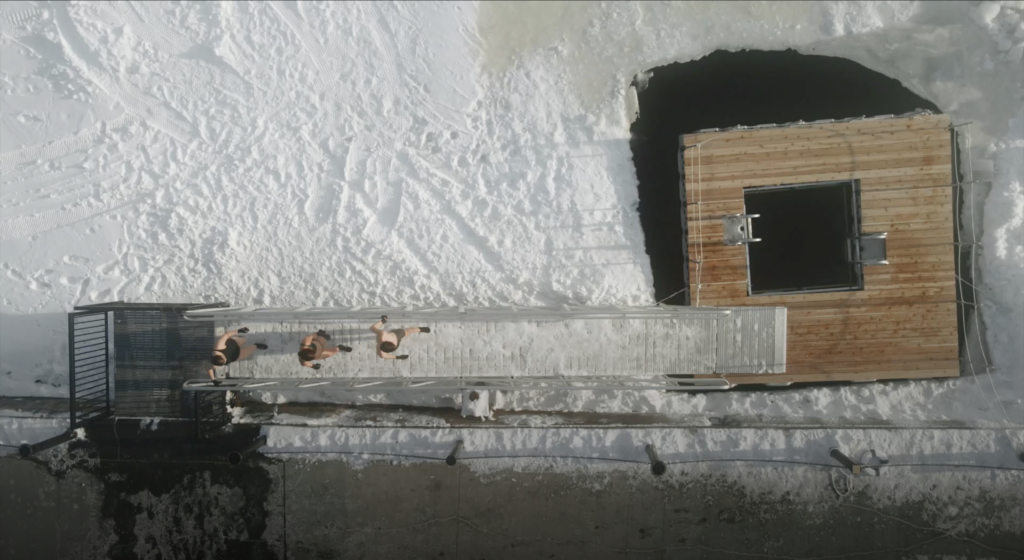
Our cold plunges are built so guests can stand instead of treading water. Adjustable bases help people feel steady. Handrails and clear entry and exit points make it easier to get in and out, even when the cold hits hard.
Those choices are intentional. They remove unnecessary stress so people can focus on their breath, their body, and what they’re experiencing.
“When cold water takes your breath away, the last thing we want is for someone to feel unsupported.”
— Justin Juntunen

How We Support People Through the Cold
Cold exposure doesn’t start when you step into the water. It starts the moment you arrive.
Our team is on site early, lighting the stoves, clearing ice, and preparing the space so it feels warm and welcoming before you ever feel cold. Guides stay with guests throughout the experience, especially for those who are new.
No one is sent in alone.
We explain what’s going to happen, what sensations are normal, and how to use your breath when things feel intense. That guidance changes the experience.
“Your first time in cold water shouldn’t feel like a test. It should feel like an invitation.”
Many people arrive with real concerns. What if I panic? What if my body reacts badly? What if I can’t do it?
Those questions are normal. They deserve to be taken seriously.
The Thermic Cycle, Explained
Every Cedar & Stone experience is designed around the thermic cycle:
Hot.
Cold.
Rest.
Rehydrate.
Repeat.
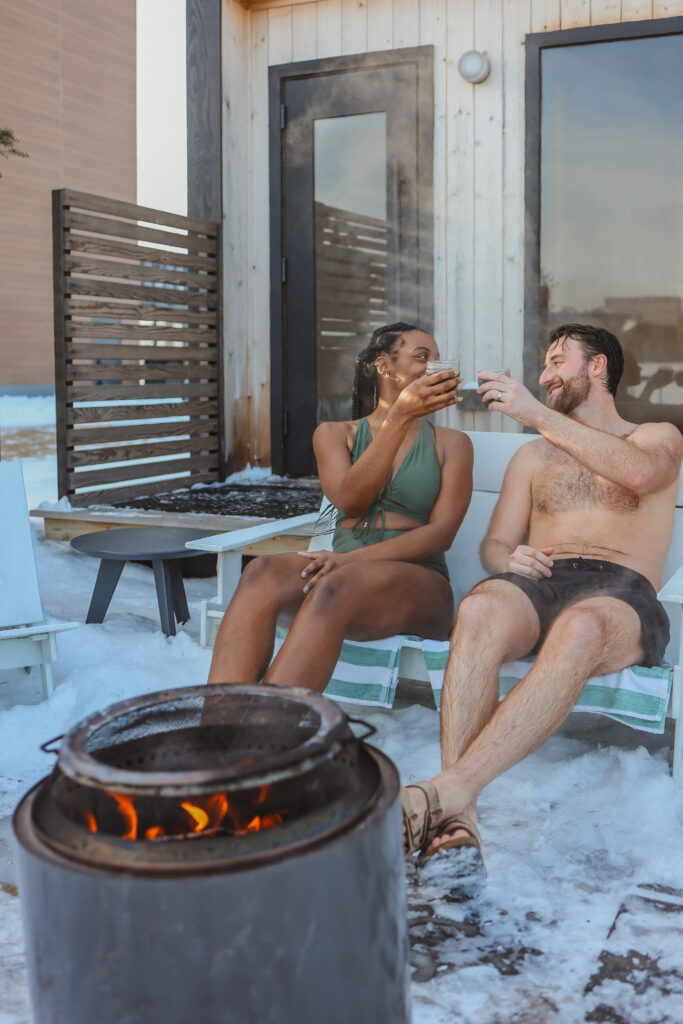
Most guests move through this cycle three to five times in a session. Each phase matters, and none are rushed.
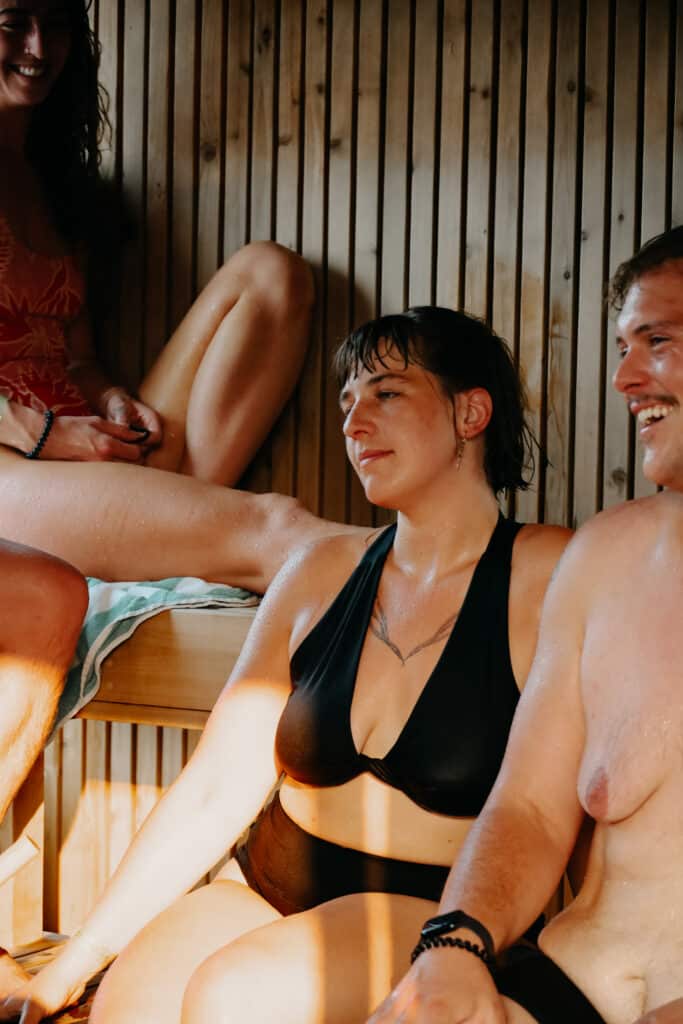
In the sauna, temperatures typically range between 160 and 200 degrees. Blood vessels open, heart rate rises, muscles relax. Over time, many people notice a moment when the cold begins to sound appealing. It happens intuitively.
“There’s a point in the sauna where the cold stops feeling scary and starts feeling right.”
— Justin Juntunen
That’s your cue.
What’s Happening in Your Body
Cold exposure feels intense because your body is responding quickly to a real stimulus.
When you enter cold water, your blood vessels tighten. Blood is directed away from the skin and toward your core to protect vital organs. This is a normal, protective response.
Cold water also activates your nervous system. Breathing speeds up. Sensations sharpen. For many people, the first moments feel overwhelming.
But when you slow your breath and stay in place, your body begins to adapt. Heart rate starts to settle. Breathing becomes more controlled.
Research on cold-water immersion shows that cold exposure affects circulation, nervous system activity, and metabolic responses throughout the body. These changes help explain why people often feel clear-headed and energized after getting out, rather than drained.
“You’re more resilient than you think. Most people realize that the moment they get their breath back.”
— Justin Juntunen
The benefits don’t come from staying in as long as possible. They come from letting your body respond and then giving it time to recover.
These principles apply just as much to at-home saunas near cold water as they do to guided experiences.
This way of moving between heat, cold, rest, and hydration has been part of Nordic culture for generations. It was never meant to be about proving something. It was meant to support daily life.
Challenge by Choice
A lot of what people see online around cold exposure focuses on extremes. Colder water. Longer holds. Pushing through discomfort.
That’s not how we approach it.
At Cedar & Stone, we practice challenge by choice. You go as far as feels right for you on that day. Maybe that’s putting a foot in the water. Maybe it’s staying in for thirty seconds. Maybe it’s longer.
All of it counts.
“This isn’t about how hard you can go. It’s about building confidence, one small step at a time.”
— Justin Juntunen
Confidence grows through supported experiences, not pressure.
What Experts Say: Winter Swimming by Susanna Søberg
For those interested in learning more about the science and tradition behind cold exposure, the work of Dr. Susanna Søberg is a trusted resource.
Her book Winter Swimming explores how cold water immersion has long been part of Nordic life and how it influences circulation, mood, stress regulation, and overall well-being. Her research helps explain the cold-shock response and why, when approached intentionally, cold exposure can feel both challenging and restorative.
Making Wellness Accessible
Our goal isn’t to create an experience reserved for the toughest people in the room. We want this to feel approachable and repeatable.
Cold exposure works best when it fits into real life. When it’s something you return to, not something you dread.
“These experiences are not meant around challenge. They’re meant to be enjoyed, not endured.”— Justin Juntunen
Whether it’s your first visit or your thousandth, our team is here to guide, teach, and support you through the full thermic cycle. At your pace.
From a very cold winter day in Duluth, Minnesota, we can’t wait to host you. Book a session.
Want to Learn More?
If you’d like to go deeper into cold exposure, winter swimming, and how to approach these practices safely and intentionally, these resources are a good place to start.
From Cedar & Stone
If you’re looking for practical guidance rooted in real-world experience, these pieces expand on what we’ve shared here.
• 7 Things to Know Before You Cold Plunge
A straightforward guide for anyone considering cold exposure for the first time.
https://cedarandstonesauna.com/7-things-to-know-before-you-cold-plunge/
• Nature’s Chill Pill: The Secret to a Safe Winter Cold Plunge
An exploration of how to approach winter cold plunging with care and intention.
https://cedarandstonesauna.com/natures-chill-pill-the-secret-to-safe-winter-cold-plunge/
For those interested in building a deeper understanding of sauna and cold exposure, especially in a business or professional context:
• Sweat Equity: Sauna and Cold Plunge Masterclass
An online masterclass covering the fundamentals of sauna and cold exposure, design considerations, and how to create experiences that are safe, thoughtful, and sustainable.
https://cedarandstonesauna.com/for-business/sweat-equity/
Research and Expert Perspectives
• Effects of Cold-Water Immersion on Recovery and Physiology
A systematic review published in Sports Medicine examining how cold-water immersion affects circulation and physiological responses.
https://link.springer.com/article/10.1007/s40279-022-01644-9
• Winter Swimming: The Nordic Way Towards a Healthier and Happier Life
By Dr. Susanna Søberg. A scientific and cultural look at cold water immersion and why it has been practiced for generations.
https://soeberginstitute.com/pages/winter-swimming-book
• Cold Exposure, Sauna, and Health
A conversation with Dr. Susanna Søberg exploring how heat and cold affect the body.
https://zoe.com/learn/cold-exposure-dr-susanna-soberg