Sauna was never designed to live inside.
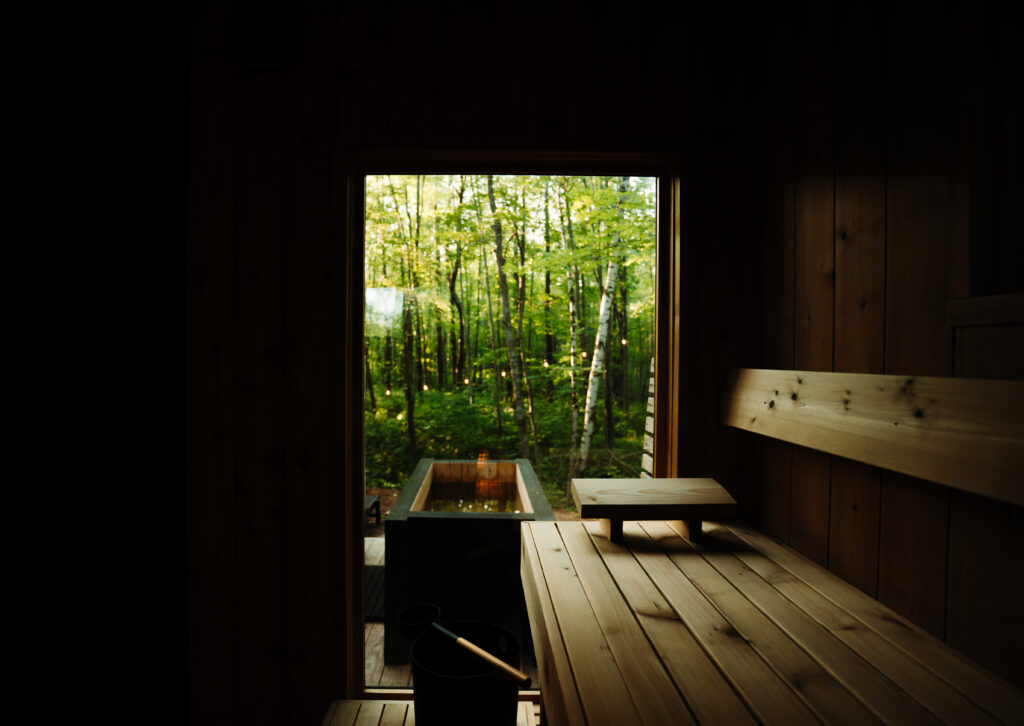
Before it became a feature in a home, it was a place you walked to. A structure set apart from the home. You stepped out into the fresh air, felt the temperature shift on your skin, and left behind the pace of the day before ever opening the door.
That transition was not incidental; it was part of the experience.
Today, sauna is often brought indoors for convenience’s sake. It becomes easier to access, easier to control, easier to fit into a routine. And while the heat remains, something special is lost in the process.
Because sauna is not only about a hot room. It is a cultural gift. A verb, not a noun. It’s about moving this process we call the thermic cycle; hot, cold, rest, rehydrate, repeat. Movement between environments that invites the body to recalibrate.
The Missing Variable: Nature Itself
Modern wellness tends to isolate variables: heat therapy, cold exposure, and breathwork. Each studied and optimized on its own.
But the body does not experience these inputs in isolation. It responds to its environment.
A large-scale study published in Scientific Reports examined nearly 20,000 people and found that individuals who spent at least 120 minutes per week in nature were significantly more likely to report good health and higher levels of well-being (White et al., 2019). That benefit was consistent across age, income, and baseline health, and continued to increase up to roughly 200–300 minutes per week.
In other words, the body keeps track of time spent outdoors, and it responds.
This aligns with broader research showing that exposure to natural environments is associated with reduced stress, improved mood, and better long-term health outcomes (Bratman et al., 2012; Twohig-Bennett & Jones, 2018).
This is where sauna begins to change when placed outdoors.
It stops being a single input.
And becomes part of a larger environment that the body already knows how to respond to.
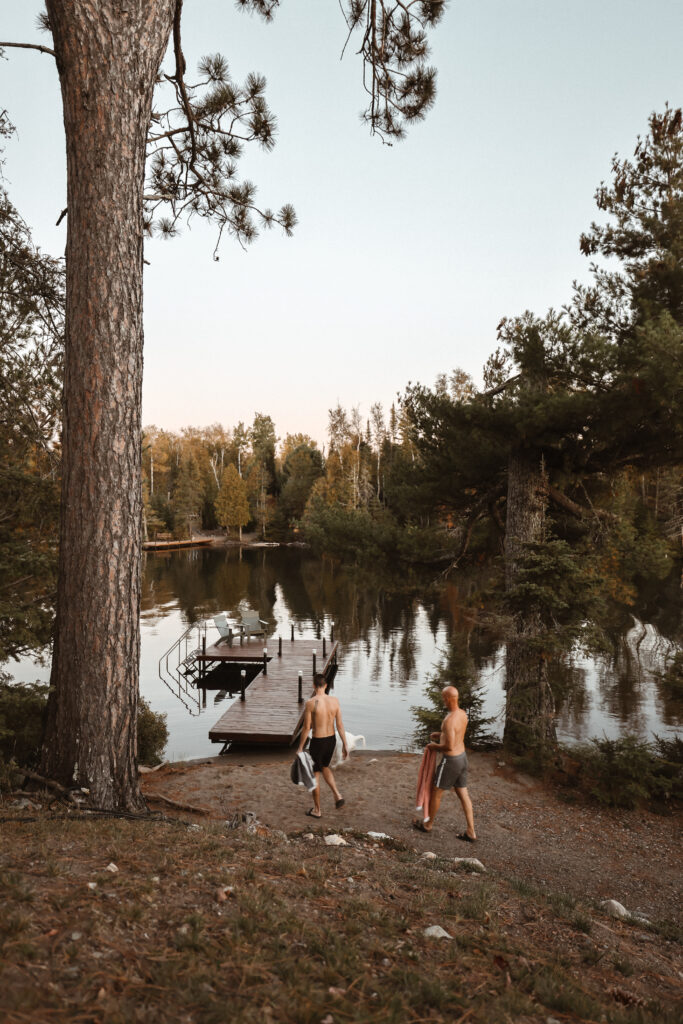
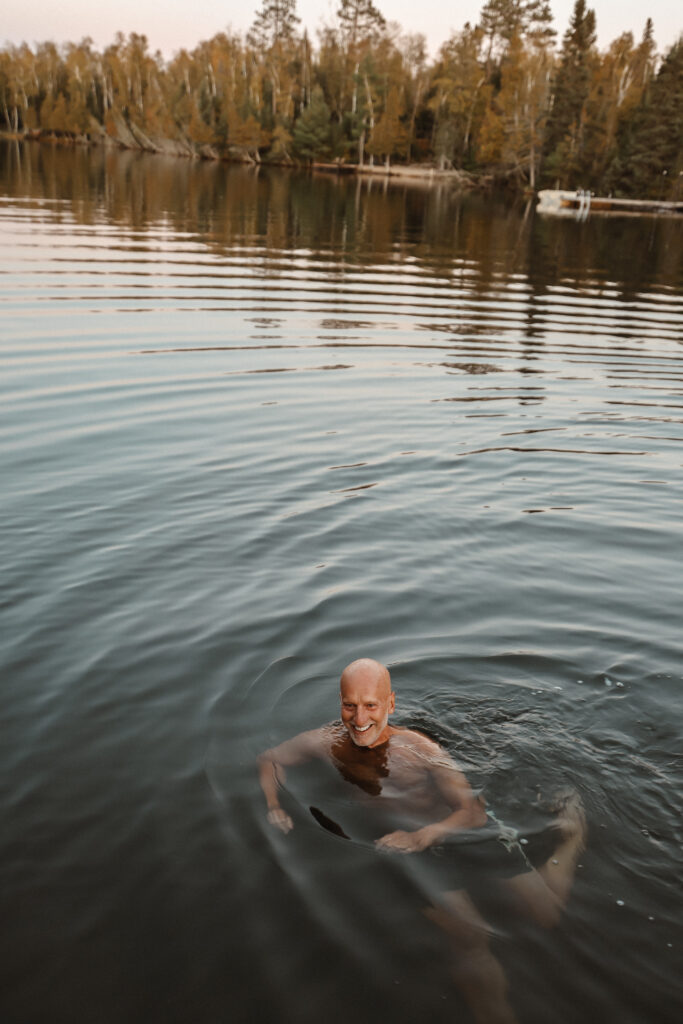
Why Outdoor Sauna Creates a More Complete Form of Wellness
Sauna, at its core, offers meaningful health benefits regardless of where it’s placed. Heat exposure supports circulation, recovery, and overall well-being in ways that are well established.
But when that same practice is brought outdoors, it begins to do more.
It compounds.
The heat remains, but it is layered with additional inputs. Elements like natural light, fresh air, and seasonal variation become a part of the experience. Time spent in an environment that engages the senses in a way that controlled spaces cannot. Each of these elements contributes to resilience, not independently, but together.
The transitions also change. Moving from heat into cold air or water becomes less simulated and more immediate. The body adapts in real-time, responding not just to temperature but also to the surrounding conditions.
Over time, this layering effect becomes the difference.
Not in replacing the benefits of sauna, but in building on them.
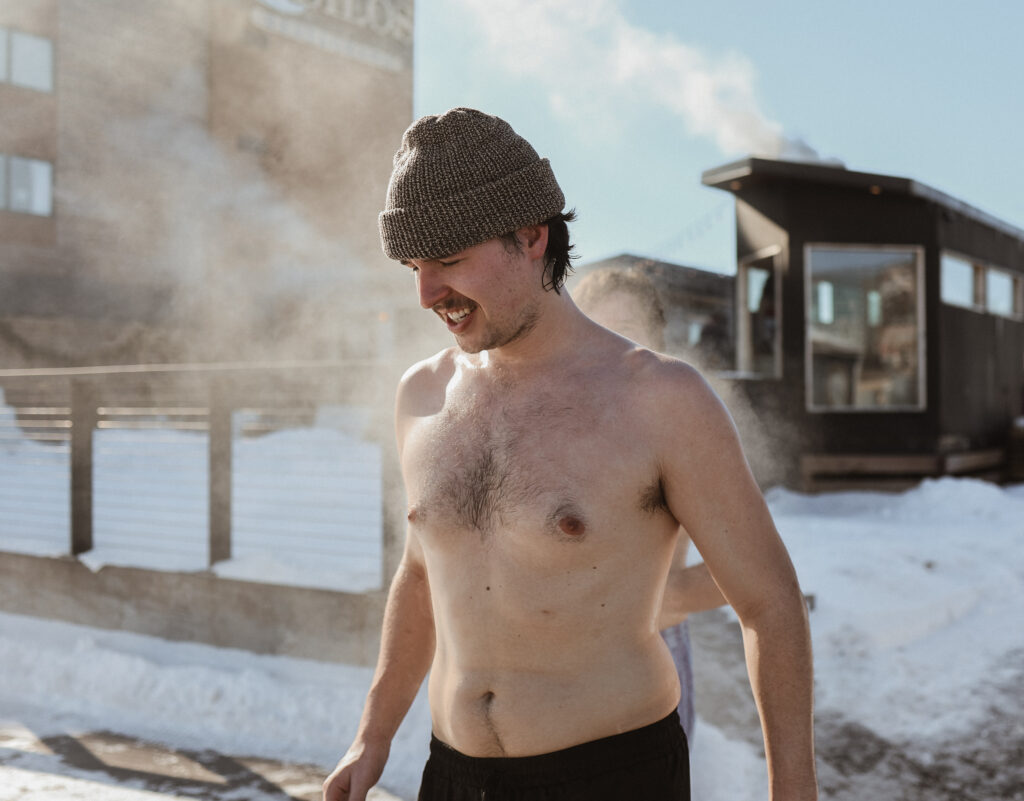
A Practice That Changes Your Relationship to Climate
We often get asked the same question when someone is considering a sauna for their home or business.
Can it go in the basement? Tucked into a bathroom?
Of course it can.
But the moment you step outside of the sauna and into the natural environment, something shifts. The experience deepens in a way that is difficult to replicate indoors.
That idea is not new. It is how sauna has always existed. Built on the land, shaped by the materials around it, and used as a way to engage with the seasons rather than avoid them.
And that is where the change becomes noticeable.
After stepping out of a 160- to 200-degree sauna, cold air that would normally feel sharp or uncomfortable often feels manageable, even refreshing. The same effect occurs in warmer conditions. On a hot day, time spent in the sauna can recalibrate perception so that 90 or 100-degree air feels noticeably milder by comparison.
“Outdoor sauna is a celebration of the seasons, a commitment to living connected to the outdoors.” – Justin Juntunen
This is contrast at work, not just within the body, but in how the body interprets its surroundings. Repeated exposure to heat and cold strengthens thermoregulation, but it also shifts the threshold of what feels extreme.
Over time, the environment becomes less something to avoid and more something to move through with ease.
And this is where the experience extends beyond the sauna itself.
Because each session outdoors also contributes to that two-hour weekly threshold of time in nature, reinforcing the same exposure shown to improve health and well-being (White et al., 2019; University of Exeter, 2019).
The result is not just a better sauna session.
It is a different relationship to the world outside it.
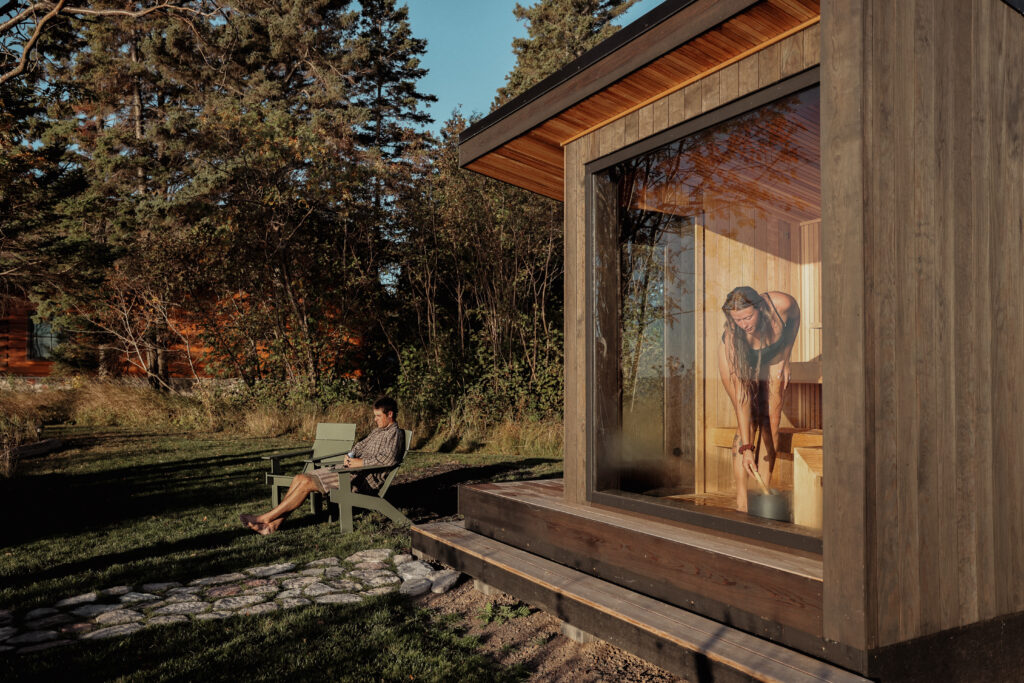
More Than a Hot Room
The case for outdoor sauna is not built on tradition alone. It is supported by a growing body of research showing that time spent in nature plays a measurable role in human health. When sauna is placed outdoors, it compounds those benefits in a way indoor environments cannot replicate.
Over time, what often starts as a personal practice becomes something shared.
The sauna becomes a reason to step outside more often. To use the backyard in seasons that might otherwise go untouched. To gather, even when the air is cold, even when the days are shorter. It shifts how a space is used, and how time is spent within it.
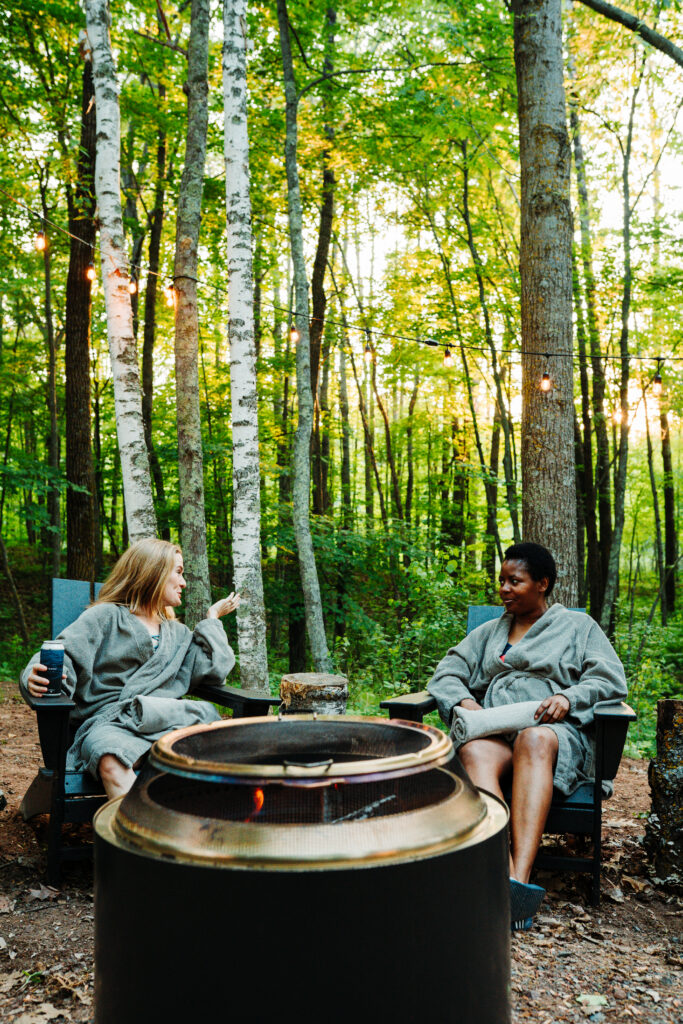
What might have once been a quiet corner of the property becomes active year-round. A place where family connects, where friends are welcomed, where the outdoors is no longer something you pass through, but something you return to.
In that way, the sauna becomes more than a structure.
It becomes a reason to be outside.
Considering an Outdoor Sauna of Your Own?
If you’re beginning to think about what this could look like in your own space, that’s usually where the right conversations begin.
Every person is different. Every property is different. And the right sauna should respond to both.
We offer one-on-one sauna consultations to help you think through placement, layout, materials, and how the experience will actually come to life day to day.
A chance to slow down, ask questions, and explore what’s possible.
Sources & References
Twohig-Bennett, C., & Jones, A. (2018).
The health benefits of the great outdoors: A systematic review and meta-analysis of greenspace exposure.
Environmental Research.
https://www.sciencedirect.com/science/article/pii/S0013935118300673
White, M. P., Alcock, I., Grellier, J., et al. (2019).
Spending at least 120 minutes a week in nature is associated with good health and wellbeing.
Scientific Reports.
https://www.nature.com/articles/s41598-019-44097-3
University of Exeter Medical School (2019).
Two hours a week is key dose of nature for health and wellbeing.
https://www.sciencedaily.com/releases/2019/06/190613095227.htm
Bratman, G. N., Hamilton, J. P., & Daily, G. C. (2012).
The impacts of nature experience on human cognitive function and mental health.
Annals of the New York Academy of Sciences.
https://nyaspubs.onlinelibrary.wiley.com/doi/10.1111/j.1749-6632.2011.06400.x