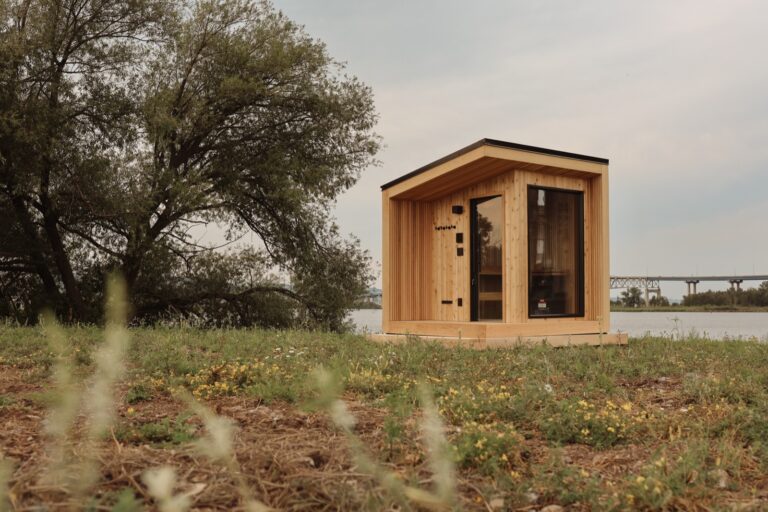
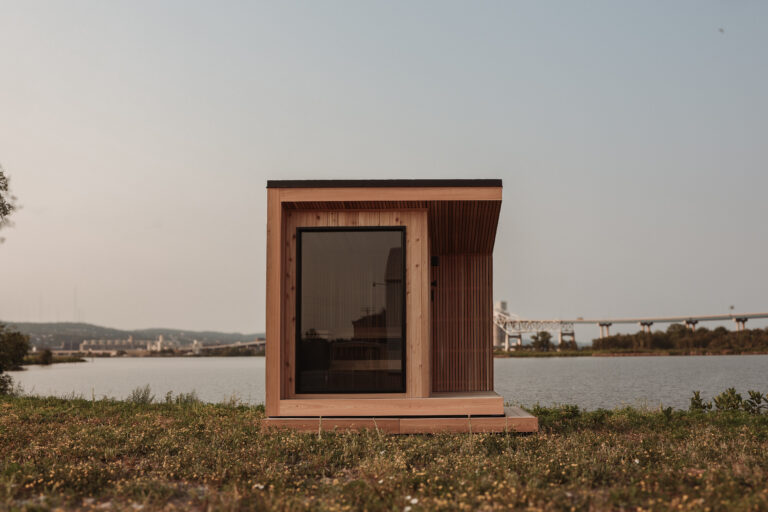
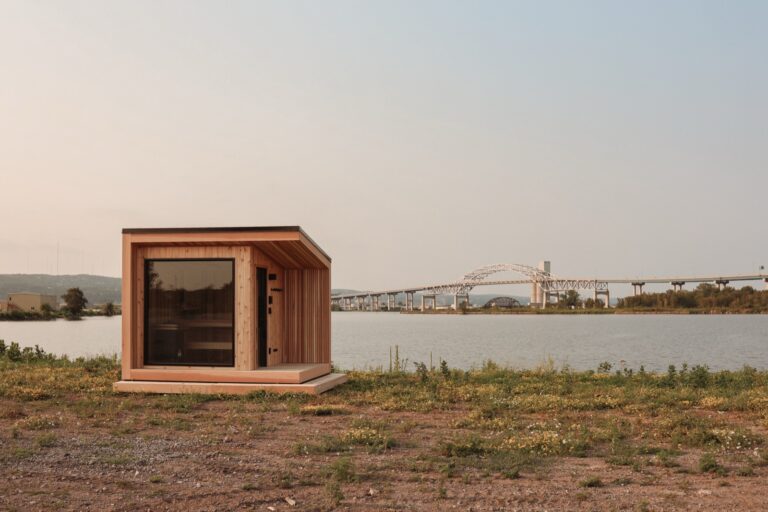
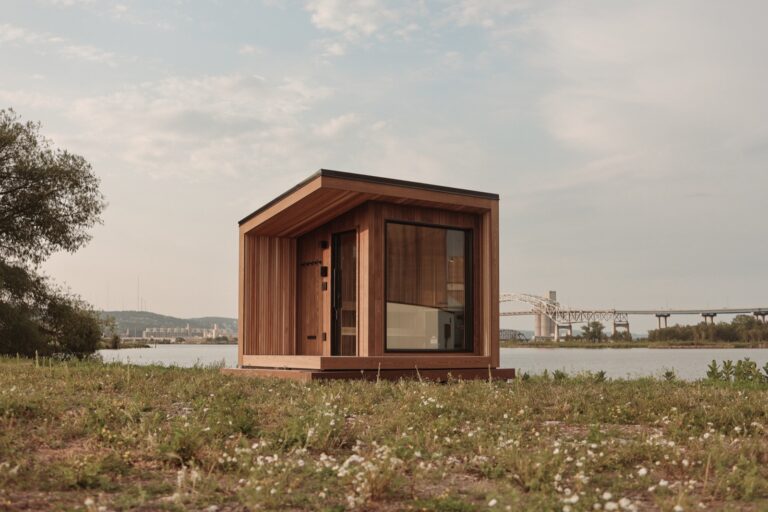
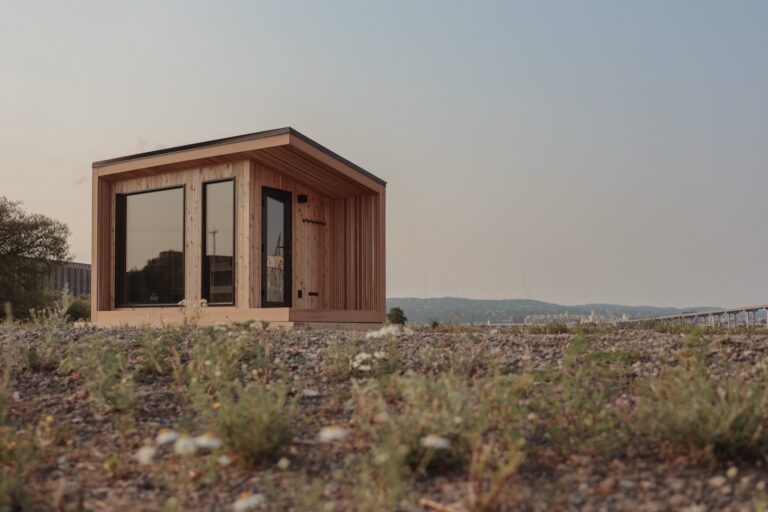
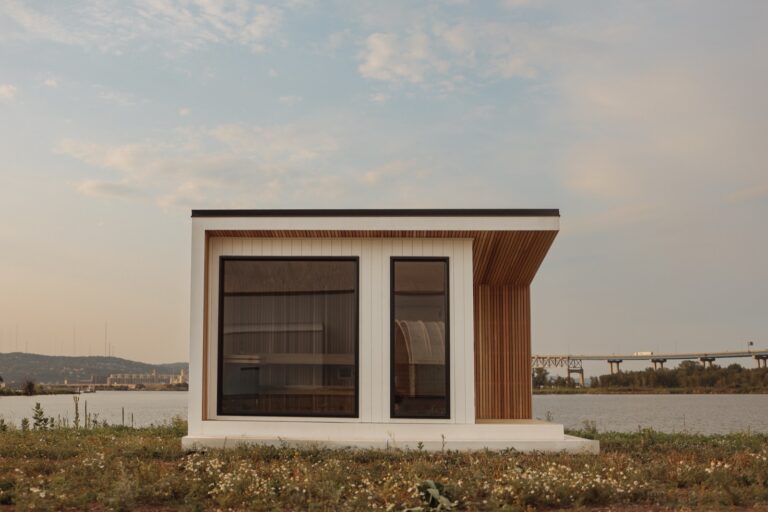
The secret to a better outdoor sauna is not a smarter heater or a trendier finish.
It is how the building itself handles heat and moisture over time.
For centuries, the Finnish log sauna set the gold standard. Not because it was elaborate, but because it worked. The materials, the mass, and the way the structure responded to extreme temperature swings created a softer heat and a longer-lasting building.
At Cedar & Stone, cross-laminated timber is how we bring that standard forward.
Built for Longevity, Without Excess
We work hard to make saunas that look elegant. Light. Modern.
But underneath that simplicity, they are stout, durable, and built for the long view.
Mass timber is a modern form of an ancient idea. Humans have always built enduring structures out of wood. Cross-laminated timber, or CLT, is simply the most refined version of that idea we have today.
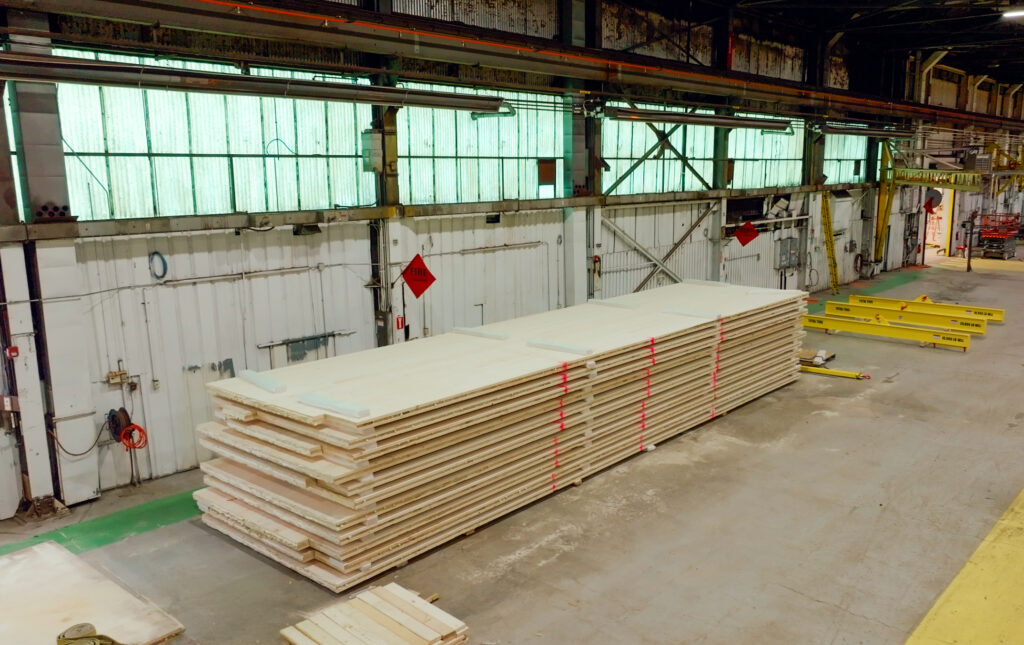
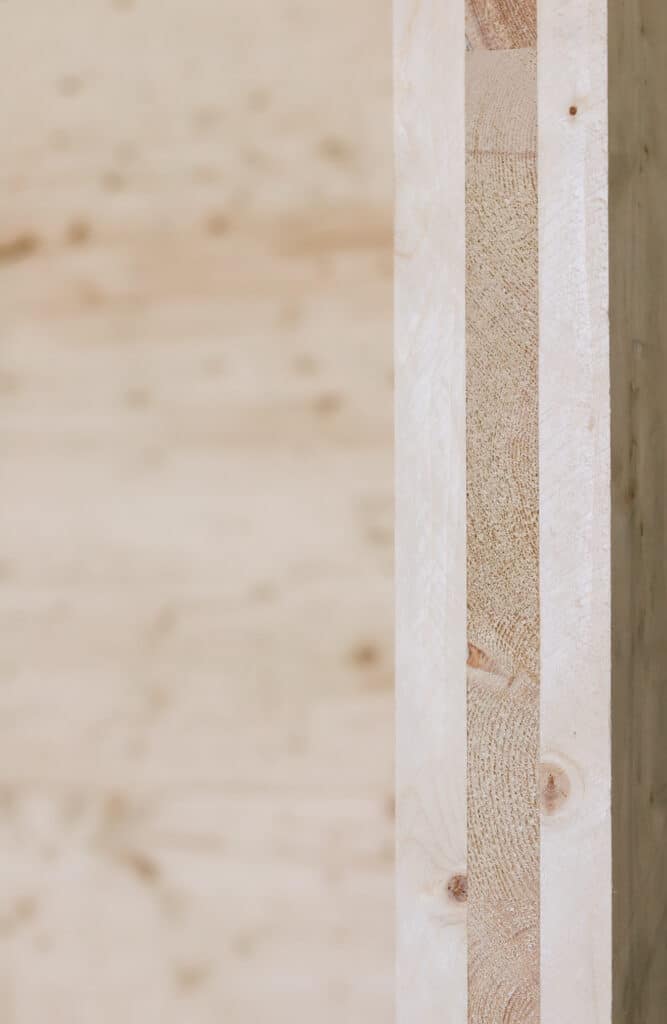
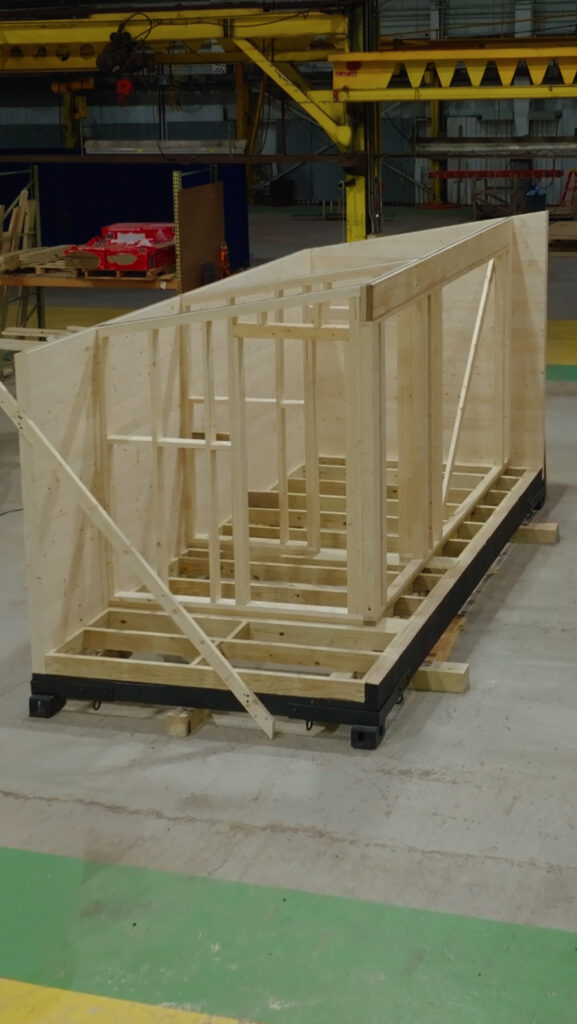
CLT is made by stacking layers of lumber so that each layer runs perpendicular to the one before it. Those layers are pressed and bonded into large, solid wood panels with exceptional structural properties.
What that allows us to do is take fast-growing, smaller-diameter trees and turn them into massive, stable building elements that perform more like old log walls than conventional framed construction.
Where the Wood Comes From Matters
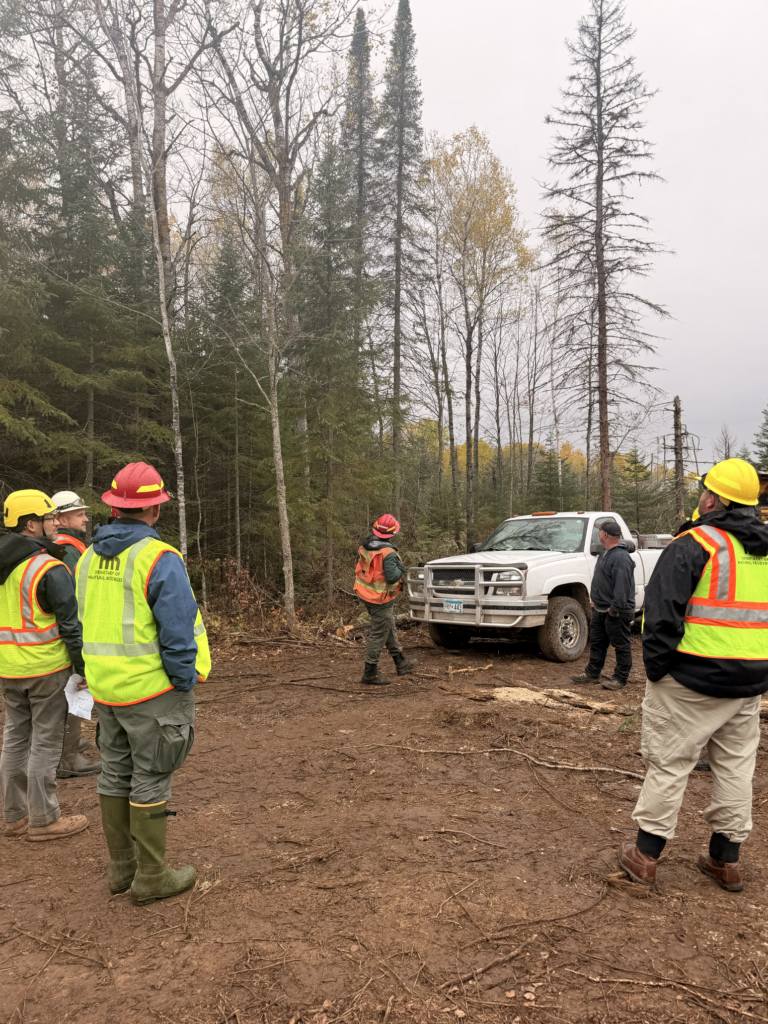
The majority of the timber in our CLT panels comes from managed forests in the northern Midwest and southern Canada. These forests have been stewarded for generations.
Trees are grown for about fifty years, harvested, and then regenerated. In North America, these forests are actually growing over time. More trees are being grown than cut.
As trees grow, they absorb carbon dioxide and store it as cellulose. When that wood becomes a building material, that carbon stays locked away. New trees grow. The cycle continues.
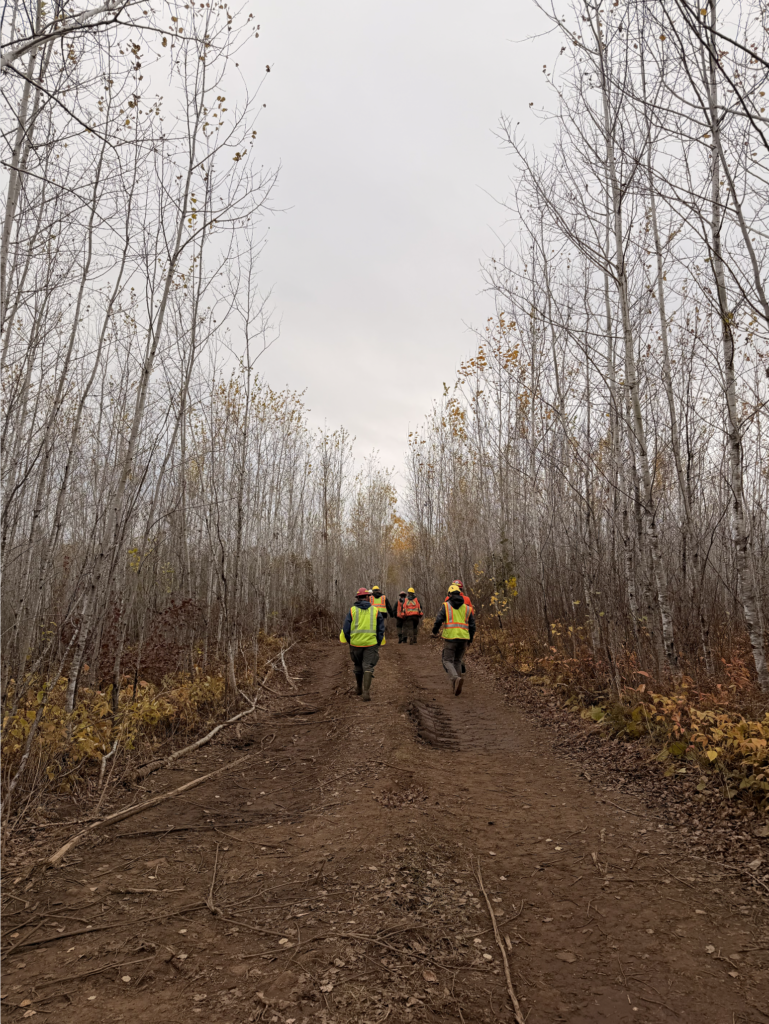
We spend time with foresters and loggers, and one thing becomes clear very quickly. Forestry is a long game. These are people thinking fifty and one hundred years ahead.
Not all wood is sourced the same way. There are good actors and bad actors. We pay close attention to where our wood comes from, how it is harvested, and how it is processed into CLT.
Right now, we work with SmartLam in Montana, one of a small group of mass timber producers in North America who share our environmental values and commitment to quality.
Why Solid Wood Creates Better Heat
In the Finnish sauna tradition, the log sauna has always been the gold standard.
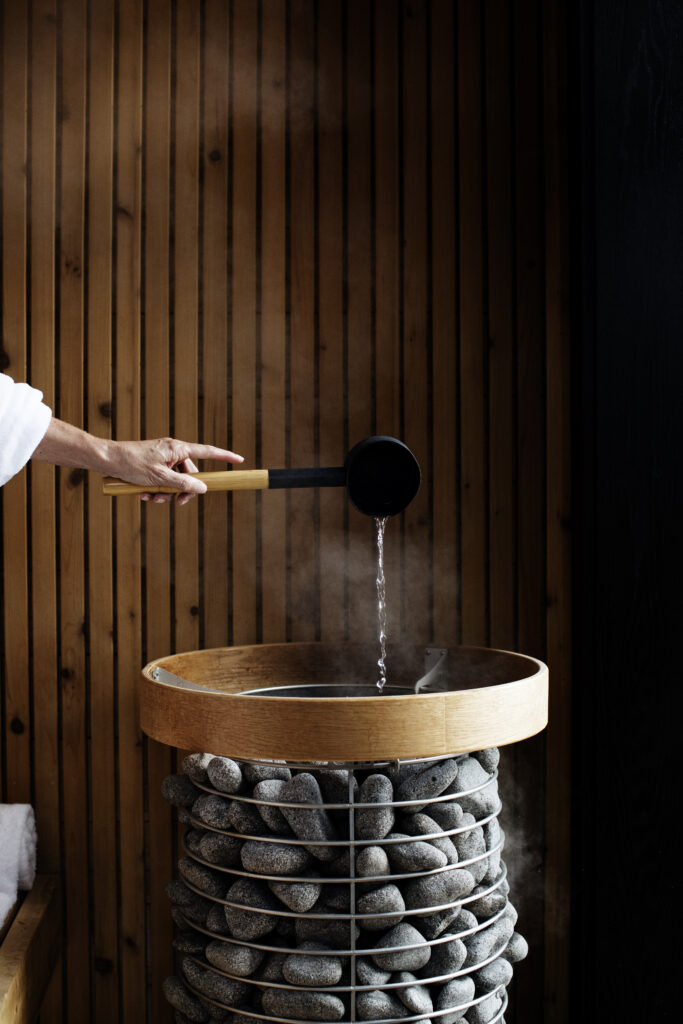
When you heat a log sauna, the stove slowly warms the wood itself. That heat then radiates back into the space evenly and gently. The result is a smoother, softer heat that you feel immediately.
“I’ve sauna’d in a solid wood sauna next to a stick-built sauna at exactly the same temperature, and the difference in the smoothness and softness of the heat is remarkable.”
Same temperature. A completely different experience.
CLT allows us to recreate that performance using farmed timber instead of massive old growth logs. We get modern design flexibility while maintaining the heat quality that made traditional saunas so effective.
Longevity Comes Down to Moisture
If you go looking for old saunas, you will find old log saunas. You will find far fewer old stick-built saunas.
The reason is moisture.
Saunas experience extreme temperature swings. In winter, you might go from below zero to two hundred degrees in an hour, enjoy the sauna, then let it cool right back down.
“Moisture is the enemy of longevity for buildings, and for saunas especially, where you have enormous temperature swings.”
Most modern saunas rely on stud walls, insulation, and a foil vapor barrier. That barrier keeps heat and moisture in, but it can also trap moisture in the wall assembly.
Over time, that trapped moisture leads to mold, rot, and shortened lifespan.
Our mass timber saunas do not rely on a hard vapor barrier. The wall assembly can dry to both the inside and the outside.
The wood’s thermal mass helps the structure dry before it cools too much. That combination of mass and vapor permeability is the foundation of a longer-lasting sauna.
Tested in the Real World
This is not theoretical.
We built a test sauna and embedded moisture sensors throughout the structure. Sensors everywhere. We have tracked that data for more than three years.
Building scientists from the University of Minnesota have reviewed the results. The walls stay dry over the long term. The wood reaches equilibrium. It performs.
We intentionally test our saunas in extreme conditions.
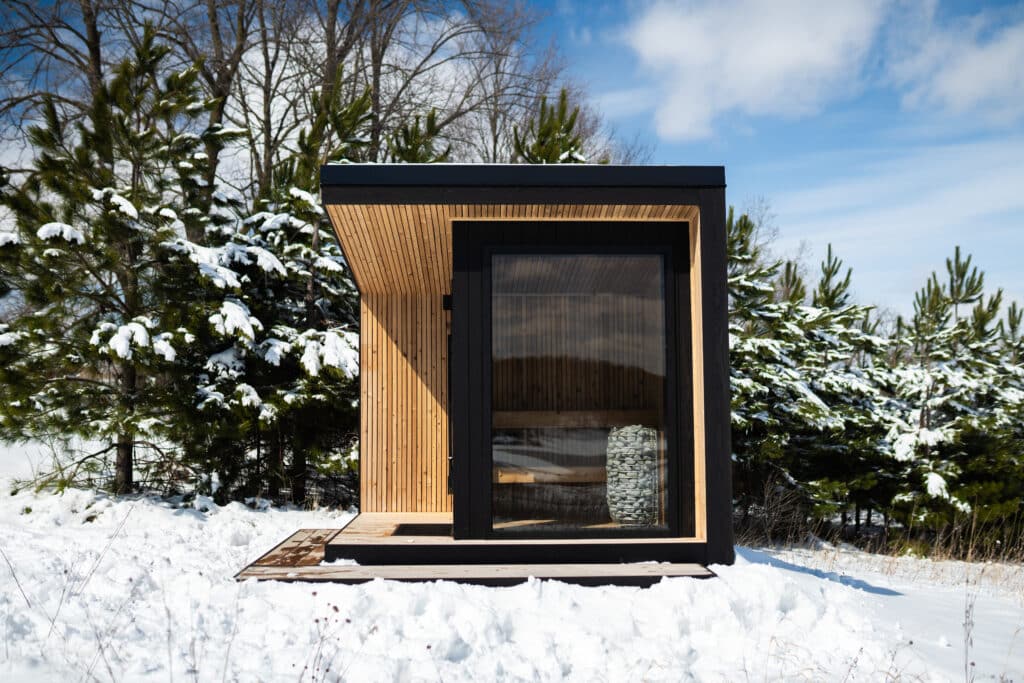
Heavy snow loads.
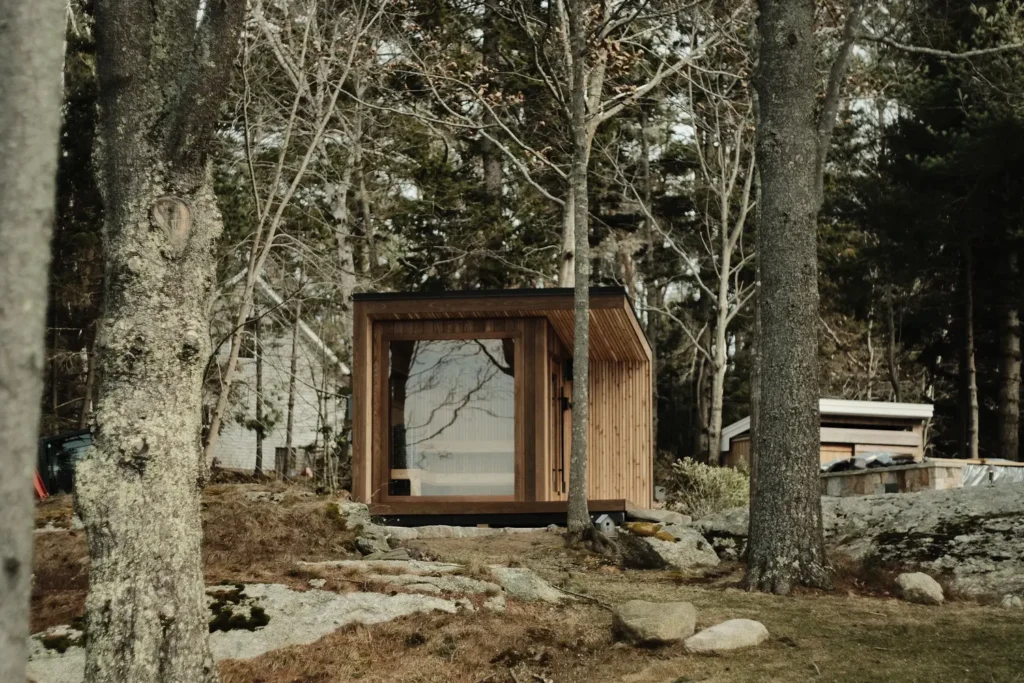
Wet forests.
Negative zero temperatures.
We operate commercial saunas that run all day, every day. We have a mass timber sauna on a barge on Lake Superior that freezes in every winter.
Across all of these environments, the material performs exactly as intended.
Designed for Real Climates
Different climates require different details.
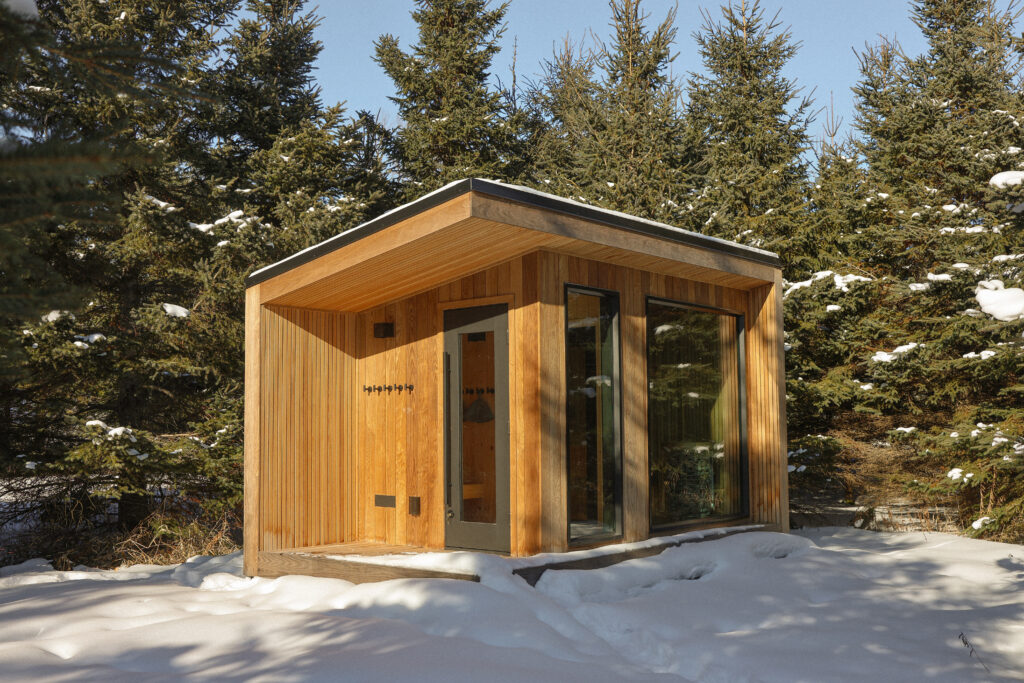
We use standing seam metal roofs with ventilated roof assemblies to create multiple drying paths. Even if water gets past the outer layer, the structure can dry.
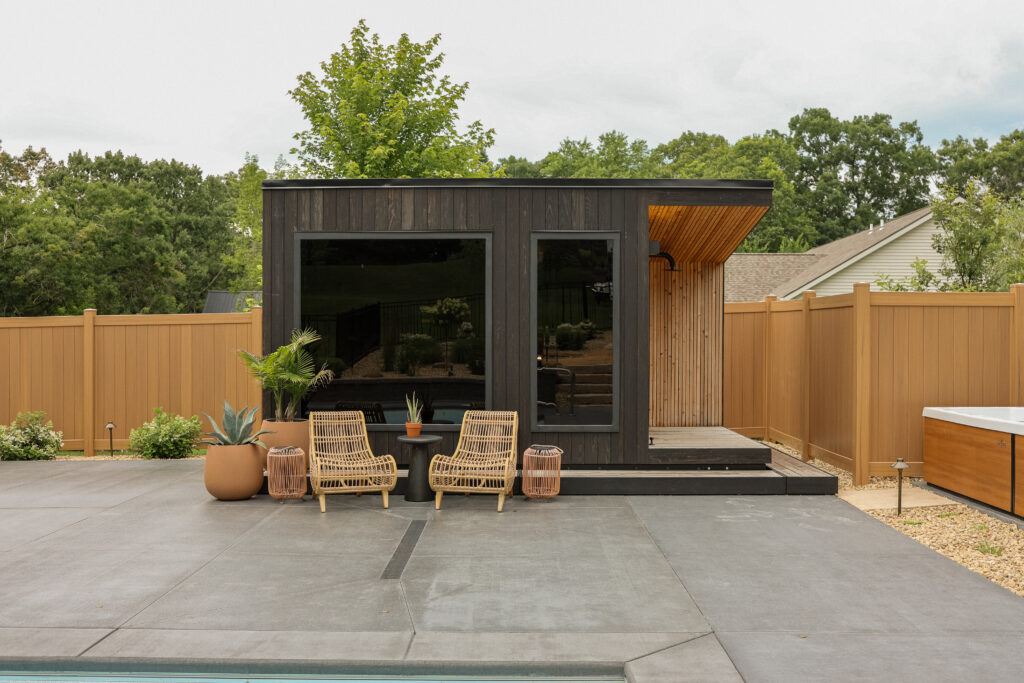
We select siding systems based on UV exposure, snow, ice, and regional weather patterns. Every sauna is adapted to where it will live.
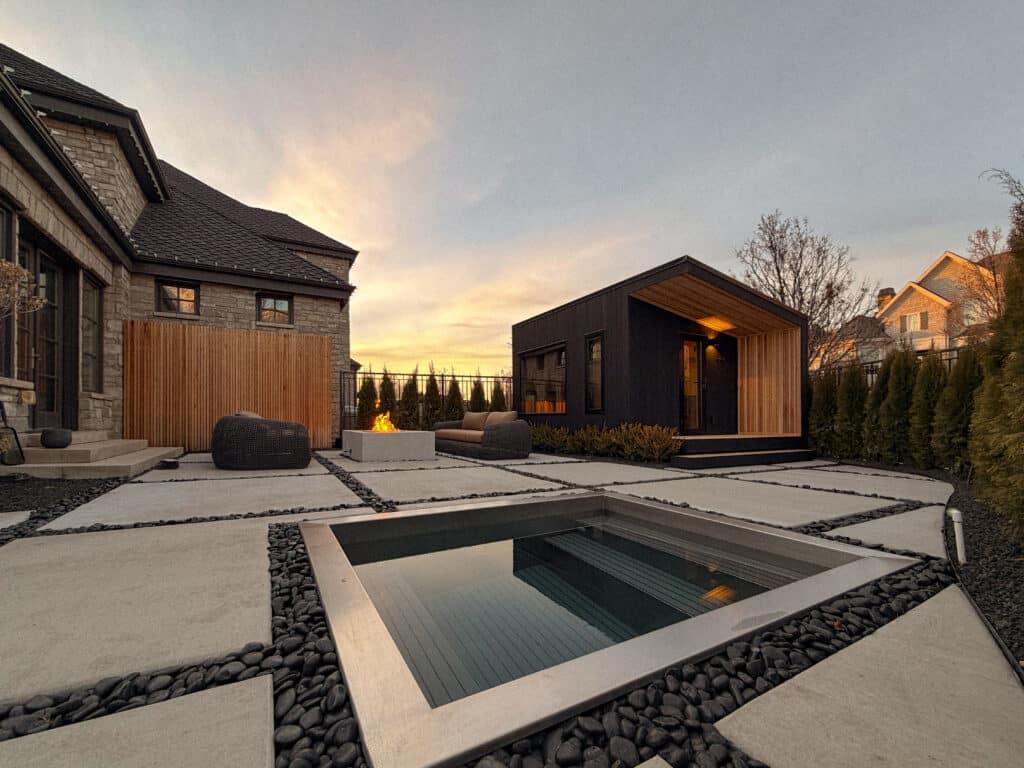
Our goal is always the same. A sauna that looks light and modern, but is fundamentally tough.
Carbon, Considered Honestly
Carbon accounting is complex, but there are three key categories.
Embodied carbon is the carbon required to produce and assemble a building.
Operational carbon is the energy required to operate it over time.
Biogenic carbon is the carbon stored in the building materials themselves.
Saunas are not houses. They heat up, cool down, and rest. Where CLT really stands out is embodied and biogenic carbon.
It takes relatively little carbon to turn a tree into a CLT panel, and relatively little to turn that panel into a sauna. At the same time, the wood stores a significant amount of carbon for decades.
Even when mass timber buildings are eventually dismantled, much of that carbon remains out of the atmosphere.
A Modern Reincarnation of the Log Sauna
“CLT is a modern reimagining of the log sauna. It gives us the performance and longevity of those old saunas, without relying on old growth timber.”
That is the heart of it.
We are currently the only company in North America building saunas out of cross-laminated timber. The material has already proven itself in Europe, and it is exciting to be on the leading edge of its use here.
Cross-laminated timber is not a trend for us. It is a continuation of a long tradition, refined with modern tools, and built to last for generations.
That is the secret to a better outdoor sauna.
If you’re exploring a sauna for your home or property and want something built for real heat, real climates, and real longevity, we’d love to show you what’s possible. Explore outdoor saunas.